
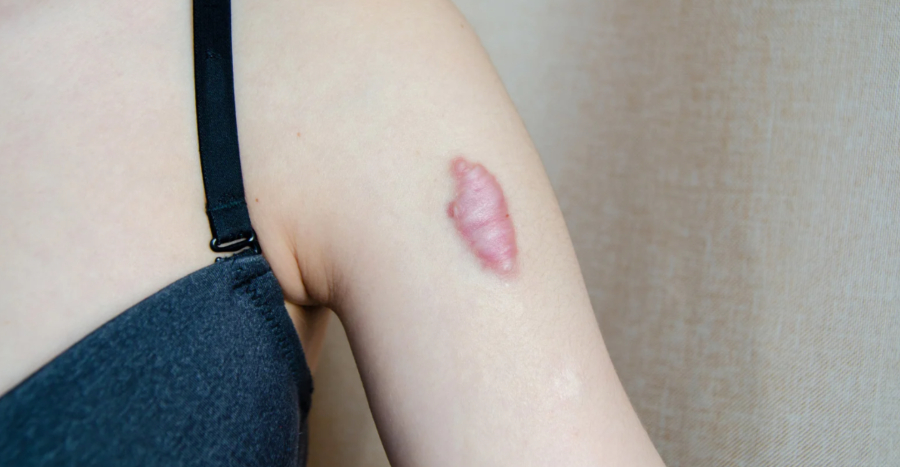

We all expect a scar to fade. But if you’ve ever had a scar that didn’t just stick around but grew bigger and thicker over time, you might be dealing with a keloid.
Unlike your standard post-pimple mark or surgical scar, keloid scars are in a league of their own, and treating them can feel like a never-ending battle.
To figure out how to deal with keloid scars once and for all, we turned to Associate Professor Tey Hong Liang, a Dermatologist, Clinician-Scientist, and the Clinical Director at the Centre for Medical Technologies & Innovations (CMTi), National Healthcare Group in Singapore.
Ahead, he breaks down everything from what causes them to the latest tech-forward solution that’s changing the treatment game.
- What Is a Keloid?
- What Causes Keloids?
- Where Keloids Love to Show Up
- Can Something Seemingly Small Trigger a Keloid?
- Will It Ever Go Away on Its Own?
- Why Are Keloids So Difficult to Treat?
- Tried-and-True Keloid Treatments
- A New Option to Prevent and Reduce Keloid Formation
- How Long Before You See Results?
- What About Side Effects?
- Real Results: What Users Are Saying
- Can You Prevent Keloids in the First Place?
What Is a Keloid?
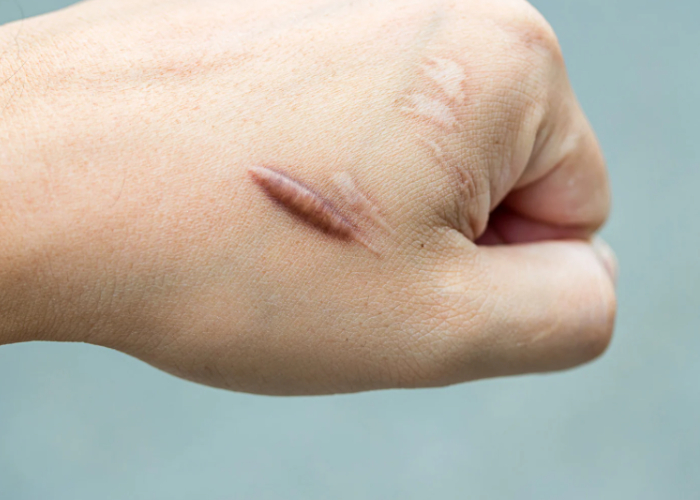
Unlike your average raised scar, a keloid is a scar that doesn’t know when to stop growing.
“Hypertrophic and keloid scars are both raised scars resulting from excessive collagen production during wound healing, but keloids extend beyond the original wound, while hypertrophic scars remain within the boundaries of the injury,” says Dr Tey.
While hypertrophic scars stay in their lane, keloids don’t. They grow bigger than the injury that caused them in the first place.
What Causes Keloids?
The truth is, science doesn’t have a perfect answer yet.
“The exact reason for their formation is not defined, but it is known to be due to an abnormal wound healing process with an overproduction of collagen,” explains Dr Tey. “Certain individuals, particularly those with darker skin tones and a family history of keloids, are more prone to developing keloids.”
That includes folks of African, Asian, or Latin American descent. And yes, they can run in families.
“While keloids are not always hereditary, a family history of them does increase the likelihood of developing them, suggesting a genetic predisposition,” he says.
Where Keloids Love to Show Up
While keloids can technically pop up anywhere, they have favourite spots.
“Keloids are commonly found on the chest, shoulders, earlobes, and jawline because these areas are prone to skin tension, which can trigger the overproduction of collagen during wound healing,” says Dr Tey.
Can Something Seemingly Small Trigger a Keloid?
Unfortunately, yes. Something as minor as a pimple, piercing, or vaccination jab can potentially result in a keloid.
“Keloids can form after various skin injuries, including those from acne, vaccinations, and other trauma,” Dr Tey confirms.
Will It Ever Go Away on Its Own?
Not exactly.
“Keloid scars, unlike normal scars, do not shrink naturally and tend to continue growing and expanding beyond the boundaries of the original wound,” says Dr Tey. “They may, however, become less active and noticeable over time, especially with age.”
Why Are Keloids So Difficult to Treat?
“Keloid scars are notoriously difficult to treat compared to other scars because they are a result of aberrant wound healing… often leading to recurrence after treatment,” says Dr Tey.
Even if you treat them, they often come back, sometimes larger than before.
“While surgery can remove keloids, they often recur, with recurrence rates ranging from 45% to 100%,” he adds.
Tried-and-True Keloid Treatments
There’s no one-size-fits-all solution, but doctors typically rely on a combination of:
- Steroid injections
- Laser therapy
- Cryotherapy (freezing)
- In severe cases, surgery and/or radiation therapy
“The most common first-line treatment is injection of corticosteroids into keloids, but it may be too painful for some people,” Dr Tey shares.
A New Option to Prevent and Reduce Keloid Formation
For those looking to avoid needles and steroids, there’s an innovative new option that’s quickly gaining attention: BioRNA Antiscar.
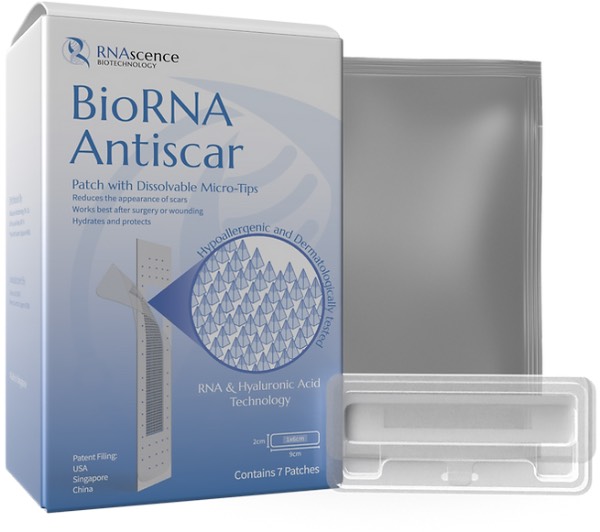
“One can consider BioRNA Antiscar… It utilises RNA-based technology delivered through dissolvable Micro-Tips in the form of a patch to target the root cause of excessive scarring. The product is an outcome of our research and clinical trial to better reduce scar appearance post-surgery, as compared to silicone patches,” says Professor Tey.
How Long Before You See Results?
“Initial results of flattening and less redness of scars may be seen in two weeks,” says Professor Tey. “For post-surgical scar volume reduction, it is recommended to use the patches for six to eight weeks.”
What About Side Effects?
BioRNA Antiscar works at the skin level, so systemic side effects are very unlikely.
“The effect of the patch is localised,” he explains. Professor Tey confirms that the patch is safe for sensitive skin, as demonstrated in patch tests previously performed on sensitive skin individuals, and one can combine it with other treatments.
“BioRNA can be used concurrently with other treatments, including steroid injections and laser therapies,” says Professor Tey. “Doctors have shared that they excise keloids and apply BioRNA patches so as to reduce the risk of keloid recurrence.”
Real Results: What Users Are Saying
According to Professor Tey, users have started seeing results in weeks.
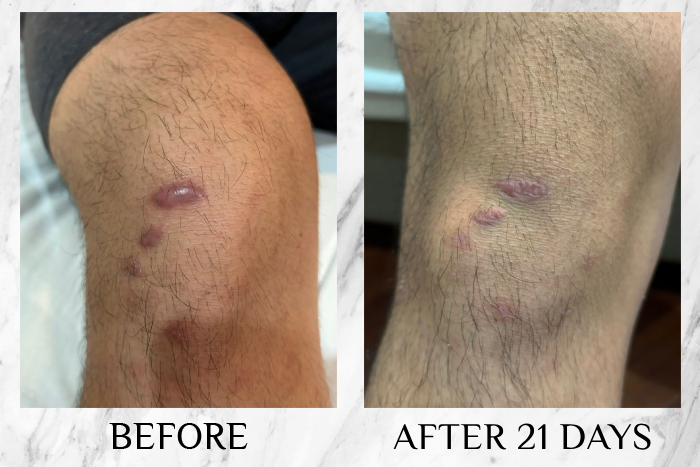
“Keloids on the knee. Day 0 vs Day 21. User is very happy with the outcome… scars are almost level with the skin, no more pain, itchiness and sensitivity. It was a 10-month-old scar. The user had tried silicone patches, but with no effect at all,” he describes the images shown above.
Can You Prevent Keloids in the First Place?
If you know you’re prone to keloid scars, there are steps you can take.
“Prioritise good wound care, avoid tension to the wound and scar, protect the area from sun exposure, and consider using BioRNA patches, silicone sheets, or pressure dressings,” Professor Tey advises.
Thickened scars such as keloids are tough, but not impossible to prevent and treat. With a combination of smart prevention, professional guidance, and new tech like BioRNA, you’ve got options that don’t involve just crossing your fingers and hoping your scar fades.
Related read: How to Prevent & Reduce C-Section Scars: A Medical Guide to Faster Healing

