
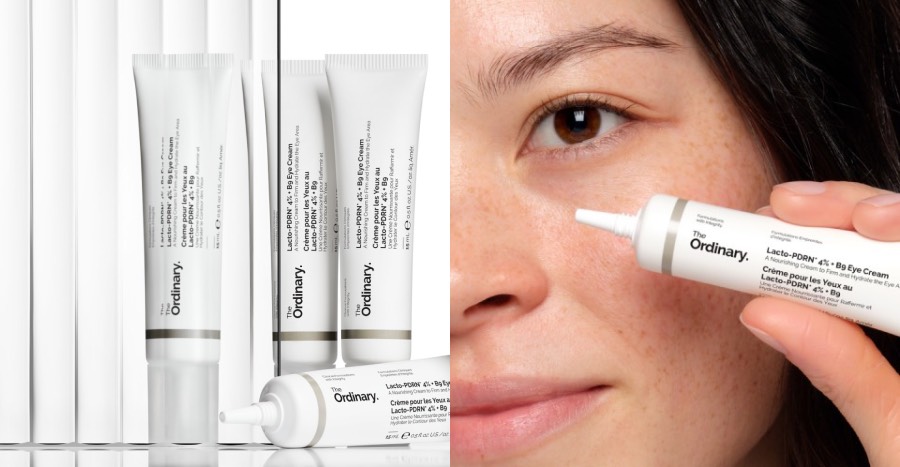

Just when we thought we’d finally come to terms with PDRN, “vegan PDRN” is now a thing?
Traditionally sourced from salmonid fish, including salmon and trout, PDRN has become increasingly popular in topical skincare after first gaining attention through professional, in-office treatments, particularly across South Korea and the wider APAC region.
Now, PDRN is showing up in formulas that take a different approach: vegan PDRN.
One of the latest examples is The Ordinary’s Lacto-PDRN™ 4% + B9 Eye Cream, which uses a biotechnology-derived form of PDRN made through fermentation.
But what exactly does “vegan PDRN” mean, and does changing its source change how the ingredient works?
We spoke to Rita Silva, Senior Manager, Scientific Communications, DECEIM, to break down the science behind it.
Related Read: Everything You Need to Know About PDRN and Why Celebs Like Kim Kardashian Swear by It!
First, what exactly is Vegan PDRN?
Before getting into the “vegan” part, it helps to understand what PDRN actually is.
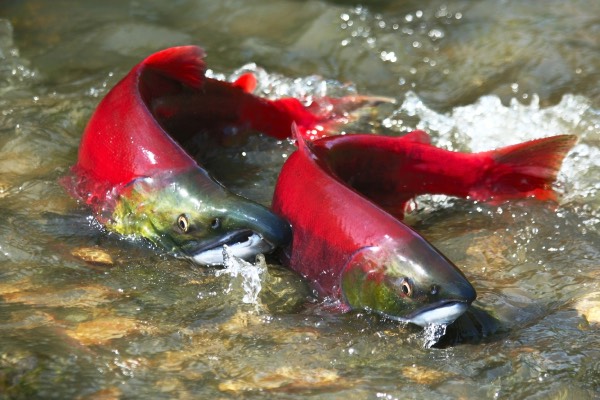
“PDRN stands for polydeoxyribonucleotide and refers to purified sodium DNA fragments,” explains Rita Silva, Senior Manager, Scientific Communications, DECEIM.
Traditionally, these DNA fragments have been sourced from salmon, which helped make PDRN well known through professional treatments before it became more widely used in topical skincare.
So, what makes it vegan? “‘Vegan PDRN’ refers to PDRN made without animal-derived sources,” Silva shared. “Advances in biotechnology now allow these purified DNA fragments to be obtained from non-animal sources, including microorganisms and plants.”
In other words, the “vegan” label refers to where the PDRN comes from, rather than changing what PDRN actually is.
How The Ordinary Makes Its Lacto-PDRN™ 4% + B9 Eye Cream Without Salmon?
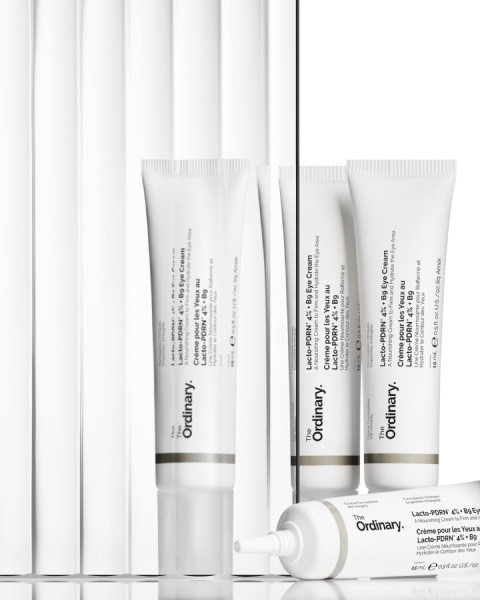
PDRN may be traditionally associated with salmon, but The Ordinary is taking a different route. Its Lacto-PDRN™ is made using Lactobacillus rhamnosus, a probiotic bacterium.
“It’s produced through fermentation, where the bacteria are cultivated and their DNA is then extracted, purified, and processed into Lacto-PDRN™,” Silva added. This gives the brand a biotechnology-derived source of PDRN without relying on animal-derived materials.
So, while the name “Lacto” might suggest something milk- or dairy-related, Silva shared that “there’s no milk or dairy involved in the making of Lacto-PDRN™.”
And The Ordinary’s approach is just one example of how vegan PDRN can be produced. According to Silva:
“researchers and ingredient suppliers are also exploring plant sources, including ginseng, green tea and rice, as alternative ways to create vegan PDRN”.
Does Vegan PDRN Work As Well As Conventional PDRN?
So, does the source of PDRN change what it can do for the skin? According to Silva, not necessarily. What matters is the resulting ingredient and the science behind it.
“Vegan PDRN can offer many of the benefits associated with PDRN in topical skincare, including supporting the skin barrier and promoting healthier-, smoother- and firmer-looking skin,” Silva explained.
For instance, Silva mentioned that “with Lacto-PDRN 4% + B9 Eye Cream, we’ve seen strong visible results both immediately and with continued use, including improvements in firmness, smoothness, hydration and the appearance of fine lines and crepey-looking skin.”
That said, vegan PDRN isn’t automatically interchangeable just because it comes under the same name.
For The Ordinary, this was an important consideration when selecting Lacto-PDRN™ for its eye cream. According to Silva, the ingredient stood out for its data in the delicate eye area.
Why Put PDRN In An Eye Cream?
The eye area is one of the most delicate parts of the skin and caring for it requires a little more attention.
“The Lacto-PDRN™ 4% + B9 Eye Cream is designed to target visible signs of ageing around the eyes, including fine lines, crow’s feet, crepey-looking skin and loss of firmness,” Silva explains. According to her, “the formula provides an immediate tightening and firming effect, while continued use helps improve the look of firmness, elasticity and overall skin texture.”
So, what is each ingredient bringing to the formula?
- Lacto-PDRN™: Supports skin regeneration, firmness and elasticity.
- Vitamin B9: Helps with visible skin renewal, hydration and smoother-looking texture.
“Together in our formula, they help target multiple visible signs of ageing around the eyes while supporting healthier-looking skin,” Silva added.
How Should You Use The Eye Cream, And When Will You See Results?
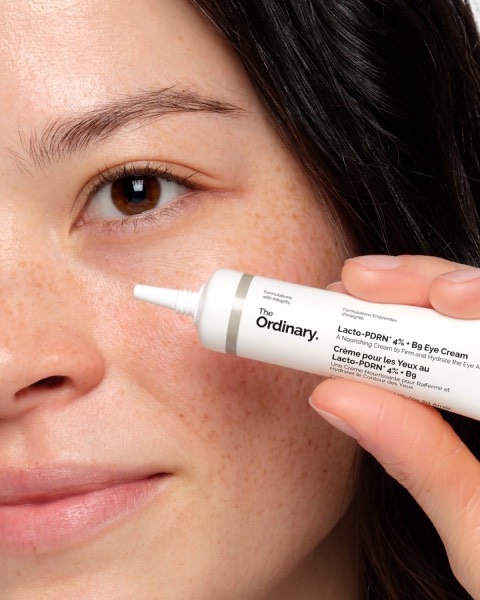
When it comes to eye care, application matters, especially around the delicate eye area. Silva breaks down the basics:
- How much: Use a pea-sized amount for both eyes.
- When: Apply morning and evening, after your serums and as the final step of your eye-care routine.
- Where: Gently tap it onto the under-eye area, eyelids and along the orbital bone, avoiding direct contact with the eyes.
- How to layer: Use it on its own or pair it with other targeted eye products depending on your concerns. For example, Caffeine Solution 5% + EGCG can be used for the appearance of dark circles and puffiness, while Multi-Peptide Eye Serum can complement it in an age-support routine.
- When to expect results: You can expect an immediate tightening and firming effect, while the visible lifting effect develops with continued use.
“You’ll notice an immediate tightening and firming effect, while the visible lifting effect develops with continued use. Over time, the eye area looks smoother, firmer and more lifted, with improvements in the appearance of fine lines, crow’s feet and crepiness,” Silva explains.
The Ordinary’s Lacto-PDRN 4% + B9 Eye Cream (15ml) retails for S$20 on The Ordinary’s TikTok Shop Singapore.

